﷽
All praises are due to ALLĀH ﷻ, The Sustainer Nourisher and Cherisher of the Universe. Peace, Blessings and Salutations be upon our beloved master and leader Ḥaḍhrat Muḥammed Muṣtafā ﷺ -
THE RANK OF ISTIGH’FĀR IN SHAREE’AH
Mullā ʿAli Qāri ﵀ writes in his commentary on Mishkātul Maṣābīh under the chapter of Istigh’fār and Tawbah that Istigh’fār is amongst the most important objects and aims of Sharīʿāh and it is the first step to be taken by any person yearning for the hereafter.[1]
The verses of the Glorious Qur’ān and blessed Ahādīth of Rasulullāh ﷺ are replete in mentioning the various virtues of Istigh’fār. In one narration Ḥaḍhrat ʿAbdullāh Ibn ʿAbbās ﵁ narrates that Rasulullāh ﷺ said: “That person who holds on to Istigh’fār, ALLĀH ﷻ will appoint for him a way out of every distress, and a relief from every anxiety, and will provide for him from avenues where he did not reckon. (Sunan Abu Dāwūd)
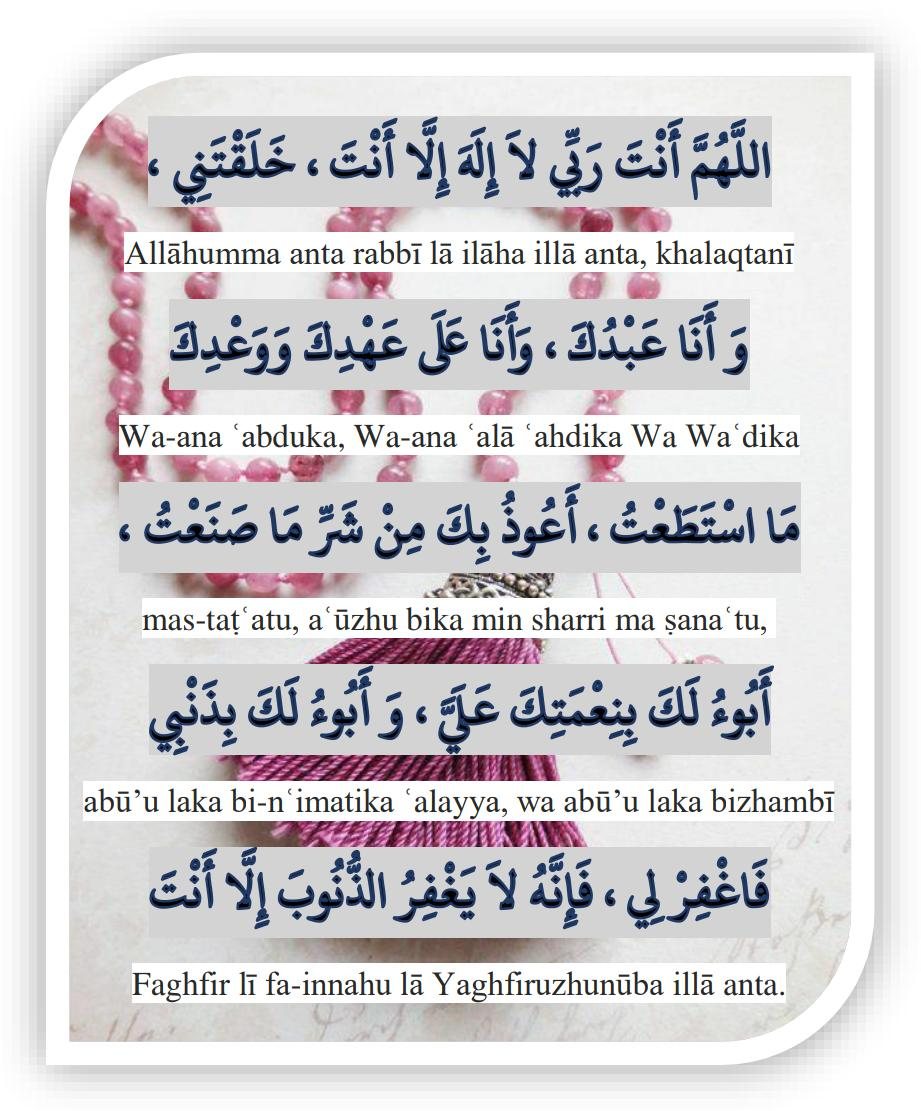
Shaddād ibn Aws ﵁ relates that the Prophet ﷺ said: (Sayyid al-Istigh’fār) The most superior way of asking for forgiveness from ALLĀH ﷻ is to say Allāhumma anta rabbi … (the Duʿā attached). Thereafter Rasulullāh ﷺ said: "If somebody recites it during the day with firm faith in it, and dies on the same day before the evening, he will be from the people of Paradise, and if somebody recites it at night with firm faith in it, and dies before the morning, he will be from the people of Paradise. (Bukhārī)
ʿUlāmā have mentioned Seven benefits with regards to this specific form of seeking the forgiveness of ALLĀH ﷻ. Firstly, a person acknowledges of his sins to ALLĀH ﷻ which is the stepping stone for a person to turn to ALLĀH ﷻ
- ثُمَّ هِيَ أَهَمُّ مَقَاصِدِ الشَّرِيعَةِ ، وَأَوَّلُ مَقَامَاتِ سَالِكِي الْآخِرَةِ ، (مرقاة 4/151 -دار الفكر) ↩